Winter Simmer Pot Recipes for January and February
TL;DR
Winter pots drop the heavy spice and keep the citrus and the green note. Four blends cover the season: rosemary lemon vanilla for the first cold snap, citrus and pine for the week after New Year, orange and vanilla for a grey February afternoon, and rose and strawberry for the morning of Valentine's Day. Three cups of water, low heat, attended, topped up as it evaporates.
What makes a pot a winter pot
The Christmas blend is built on cinnamon, clove and cranberry, and it is wonderful for exactly six weeks. By the first week of January the same pot smells like something you have already finished — the tree is at the kerb and heavy spice reads as stale. Winter blends keep the parts that survive the holiday: citrus peel, rosemary, pine, vanilla. They drop the parts that date: clove, star anise, cranberry, and the word Christmas.
The method does not change. About three cups of water in a small saucepan, an inch of headroom, low heat, attended, water topped up as it evaporates. What changes is the cue — winter pots are started by weather and calendar, not by guests arriving.
When to run the winter blends
- The first cold snap. Pot on in the morning, low heat, back burner. It is the winter version of opening the windows.
- The week after New Year. The tree is down and the holiday blend has started to smell like last month. Move to the citrus-and-pine pot: green note kept, cinnamon dropped.
- A grey February afternoon. Orange and a drop of vanilla. Two ingredients, nothing to shop for, and the softest scent of the four.
- The morning of Valentine's Day. Start the rose and strawberry pot half an hour before anyone else is up, so the room is already right when the day starts.
Rosemary lemon vanilla
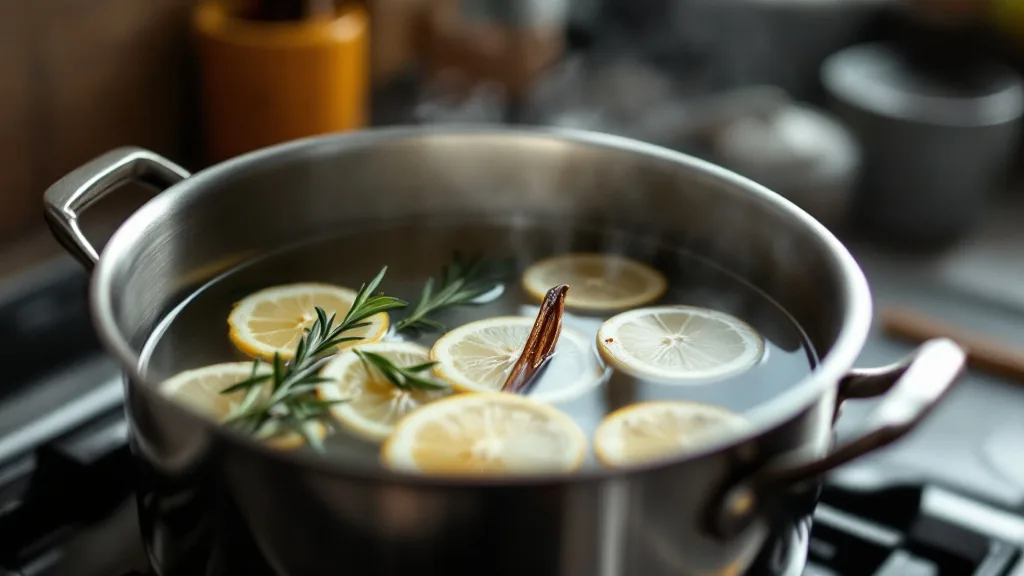
The first cold-snap blend, and the one most people keep coming back to. Sharp lemon, a green rosemary edge, and a single drop of vanilla that rounds both off.
| Ingredient | Amount |
|---|---|
| Lemon, thin slices | 2 or 3 |
| Fresh rosemary | 3 sprigs |
| Vanilla extract | 1 drop, once the water is warm |
| Water | 3 cups |
- Three cups of water in a small saucepan, an inch of room at the top.
- Two or three thin lemon slices and three rosemary sprigs. Add the vanilla once the water is warm — in cold water the alcohol flashes off before it can carry.
- Bare simmer, lid off, top up as it evaporates.
Two or three slices is the amount that stays bright. Five slices and the steam turns sharp enough to sting your eyes. Rosemary is doing the same job here that pine does at Christmas, and it is the one ingredient in this pot most people already have growing.
Post-holiday citrus and pine, no cinnamon
| Ingredient | Amount |
|---|---|
| Orange, sliced | 1 |
| Lemon, thin slices | 2 or 3 |
| Fresh pine or rosemary | 3 sprigs |
| Water | 3 cups |
- Three cups of water, an inch of headroom.
- One sliced orange, two or three lemon slices, three sprigs of pine or rosemary. Leave the cinnamon and cloves in the jar — that is the point of this pot.
- Simmer low, top up, stay with the stove.
Pine needles carry a resinous note that intensifies as the water reduces, so if you use pine rather than rosemary, top up sooner and keep the pan fuller. Rosemary is the safer substitute and the one to choose if the pot is going to run for three hours. For the holiday version with the spice left in, the Christmas simmer pot is the same method with a different shopping list.
Cozy orange and vanilla
| Ingredient | Amount |
|---|---|
| Oranges, sliced | 2 |
| Vanilla extract | 1 drop, once the water is warm |
| Water | 3 cups |
- Three cups of water, an inch of headroom.
- Two sliced oranges, vanilla added once the water is warm.
- Simmer low, top up, off when you leave the house or go to sleep.
Two ingredients and nothing to shop for — this is the pot for the afternoon you are already home and the weather is doing nothing. No sugar: vanilla extract carries the dessert note on its own, and sugar in the water just makes the pan sticky.
Pre-Valentine rose, strawberry and vanilla
| Ingredient | Amount |
|---|---|
| Strawberries, sliced | 1 handful |
| Culinary rose petals, fresh or dried, or 1 rose tea bag | A small handful, or 1 bag |
| Vanilla extract | 1 drop, once the water is warm |
| Water | 3 cups |
- Three cups of water, an inch of headroom.
- Strawberries and rose petals in, vanilla once the water is warm.
- Simmer low, top up, attended.
Kitchen ingredients only. Rose petals have to be food-grade — culinary dried petals or a rose tea sold for drinking. Florist roses are grown for looks and are treated accordingly, so they do not go in a pan you are breathing over. Strawberries go soft within a day once cut, which is why this pot is a same-morning job rather than a night-before one. The Valentine simmer pot page takes this blend as its own recipe, with the dry-bowl version and the gift-jar timings for February.
New Year simmer pot: citrus, star anise and vanilla
The fifth blend is the one for the week between Christmas and the first Monday back. Every December pot on this site leans on cinnamon and cranberry; by 1 January that smell has been in the house for a month and the nose has stopped registering it. This pot drops the heavy spice and keeps the light end: citrus peel, star anise, vanilla.
| Ingredient | Amount |
|---|---|
| Orange peel, fresh or dried | Peel of one orange |
| Lemon slices | 3–4 slices |
| Star anise | 2 pods |
| Vanilla extract | 1 drop, once the water is warm |
| Rosemary (optional) | 1 sprig |
| Water | 3 cups |
- Peel the orange in wide strips rather than slicing it whole — the oil lives in the peel and a strip gives it up faster than a slice.
- Water first, then peel and lemon, then star anise. Vanilla goes in once the water is warm, not before.
- Bare simmer, attended, two to three hours. Rosemary, if you use it, only for the first hour — it turns medicinal if it stays in.
Do not add cinnamon to this one. It is the single ingredient that makes a pot read as December, and its absence is what makes the January pot smell new. If you have half a jar of December blend left over, the honest options are to use it up before New Year or to simmer it once more and let it go — mixing it into this pot puts the heavy spice back in.
If the calendar has moved on and you are looking at February instead, the rose and strawberry blend above is the closest thing on this page. If you would rather have the same ingredients working cold — in a bowl or a drawer sachet instead of a pan — the dry-blend potpourri recipe shows how the identical fruit-and-spice list is measured and used without any heat.
How much water, and how long
Three cups in a small saucepan is the working quantity for all four blends: it covers the fruit, leaves an inch of headroom, and takes twenty minutes to reach a bare simmer. A wider pan evaporates faster than a narrow one at the same heat, so a sauté pan needs topping up sooner than a milk pan.
On the stove, expect two to four hours of usable scent with water added as it drops. In a slow cooker on low, four to six hours is realistic. Past that the fruit has given everything it has and the pot smells of warm water — which is the signal to stop, not to add more spice. Reuse is covered below.
Reusing and storing a winter pot
- Between sessions. Strain the solids, keep them covered in the fridge, and reheat gently with fresh water the next morning. The water itself turns; pour it away rather than storing it.
- Dry material can be portioned ahead. Dried orange slices and whole spices go into a jar or a bag the night before without losing anything — see how much goes into one simmer pot bag.
- Fresh fruit is a same-day job. Sliced citrus and strawberries lose their scent in the fridge faster than they spoil.
- Do not freeze the pot. The fruit breaks down on thaw and the texture in the pan goes to pulp.
Our recommended picks
As an Amazon Associate, we earn from qualifying purchases. Links below are affiliate links marked as sponsored — a qualifying purchase may earn us a commission at no extra cost to you.
Culinary dried rose petals
Food-grade petals or a rose tea — never florist roses.
Small saucepan with a heavy base
A heavy base is what keeps a two-hour simmer from scorching.
Stovetop, water, fire, pet, and child notes are on the simmer pot safety page.
More recipes
Frequently asked questions
What is a good simmer pot for January, after the holidays?
Citrus and a green note, without cinnamon. Slice one orange and two or three thin lemon slices, add three sprigs of pine or rosemary, and simmer on low in about three cups of water. It reads as fresh rather than festive, which is what the week after New Year calls for.
How long should a winter simmer pot last?
Two to four hours of gentle steam on the stove, topped up with water as it evaporates, or most of a day in a slow cooker on low. After that the fruit has given up its scent and the pot smells of warm water. Strain it, refrigerate the solids and reheat once more if you want a second session.
Is a simmer pot a humidifier?
No, and treating it as one is a bad idea. A simmering pan does put moisture into the air, but a humidifier is built to run unattended for hours, and a stove pot is not. Keep the pot attended, and if a room genuinely needs humidity, that is a humidifier job.
Can I use dried orange slices instead of fresh in winter?
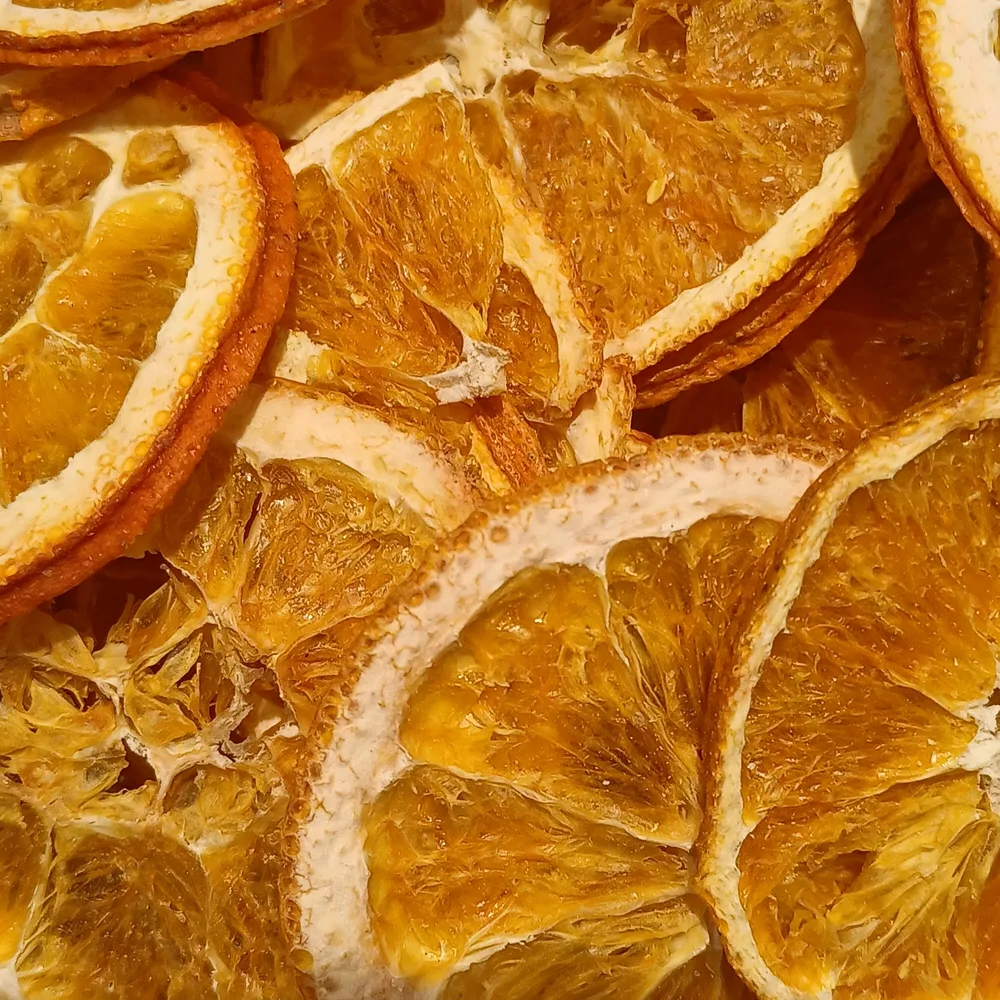
Yes, and in January the dried ones are often better — they are what you have left from the holiday batch, and they keep indefinitely when sealed. Use six to eight slices per pot in place of one fresh orange, and expect a rounder, less bright scent.
Does a winter simmer pot need essential oil?
No. The oils in citrus peel and rosemary needles are already volatile and go into the steam on their own. If you do want to add oil, add it at the end and read the pet notes first — concentrated oils are a different risk category from the fruit itself.
What should I do with the fruit when the pot is finished?
Compost it, or refrigerate the solids covered and reheat them once with fresh water. Do not leave fruit sitting in the pan overnight: it sours, and the pan needs to be washed before the next pot anyway.