Simmer Pot Bags: How Much Goes In One Bag, How to Seal It, and How Long It Keeps
TL;DR
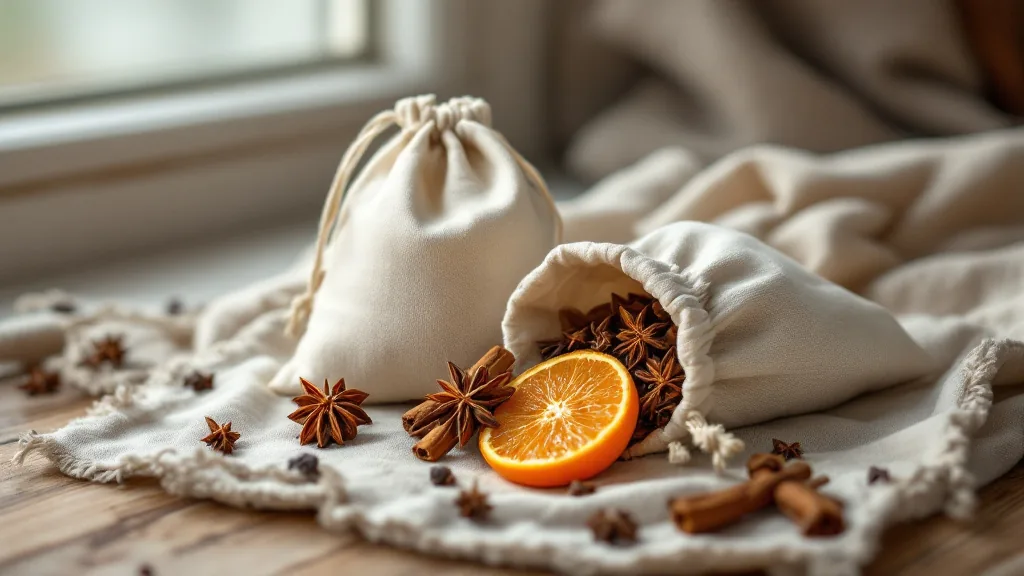
One bag for one small saucepan: about 3/4 cup dried fruit plus 2 to 3 tablespoons of whole spice — 6 to 8 dried orange slices, 2 cinnamon sticks, 10 to 12 cloves and 1 star anise pod. Fill fruit-side-out so slices stay whole, seal out the air, and label the date. A sealed dry bag holds its quality for a few months; a fresh bag is good for two to three days in the fridge and cannot be posted.
What counts as a simmer pot bag
Three different things get called a simmer pot bag, and they keep for wildly different lengths of time. A dry bag holds only dehydrated fruit and whole spices; it is the format sold at craft fairs, the one you can make ten of in an evening, and the only one worth posting. A fresh bag holds cut citrus, fresh cranberries or apple, and maybe a rosemary sprig; it has to be refrigerated and used within a couple of days, because cut fruit starts to ferment and the bag fogs up from the inside. A scent sachet is the odd one out: it is usually decorative potpourri in a fabric pouch meant to hang in a closet, and it is frequently treated with fragrance oil, so it should not go into a pan of water at all.
This page is about the dry bag and the fresh bag, in that order. If you are buying rather than filling, the pouch format and what a kit contains is covered on the simmer pot kits page, and the blends themselves live on the recipe page.
How much dry mix goes into one bag
A bag sized for one small saucepan holds enough for one pot, and one pot is a generous handful rather than a packed pouch. The working proportion is roughly 75 percent dried fruit to 25 percent whole spice by volume. Push the spice past that and the pot turns medicinal — clove and star anise are loud, and they are the reason a bag can smell wonderful in the packet and harsh in the water.
| Ingredient | Per bag | Ten bags | Notes |
|---|---|---|---|
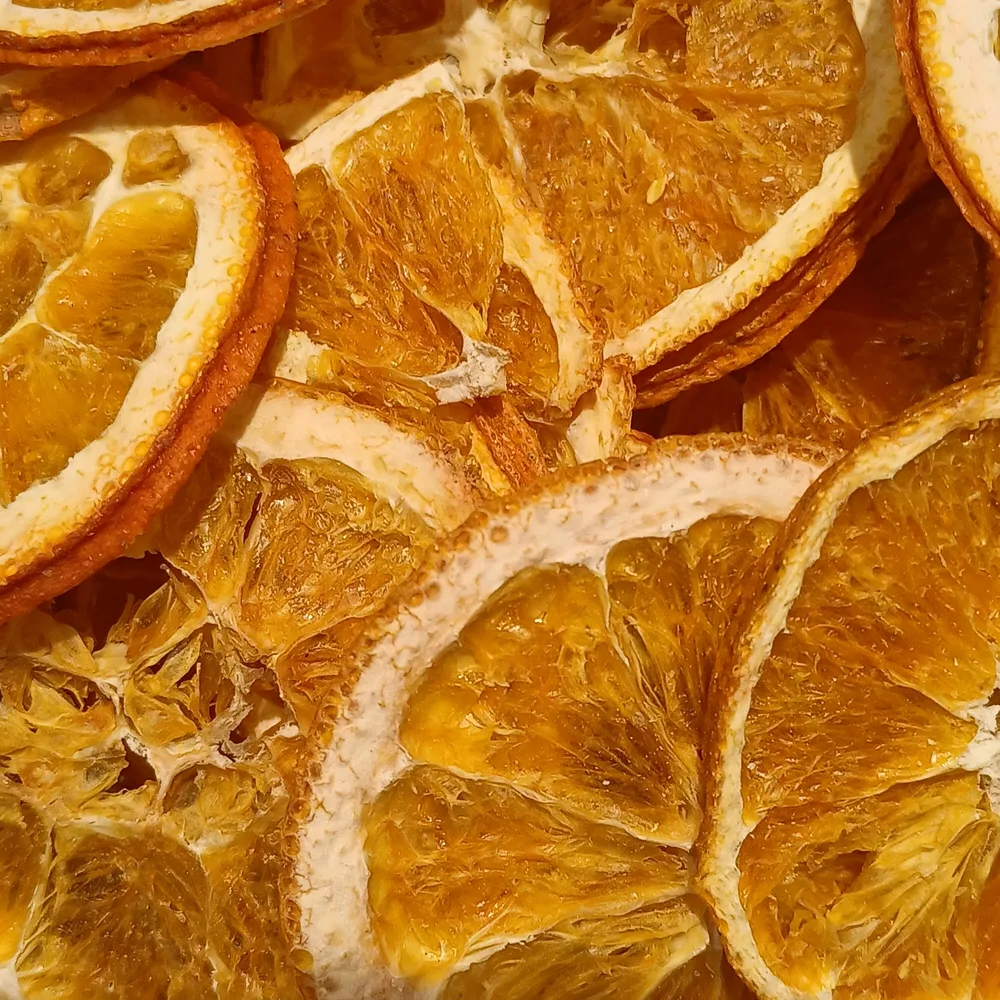
| Dried orange slices | 6–8 slices, ~3/4 cup loose | 2 large oranges' worth, dried | The visible layer; keep them flat |
| Dried cranberries | 2 tablespoons | about 1 1/4 cups | Tartness that cuts the spice |
| Cinnamon sticks | 2 sticks | 20 sticks | Snap them so they lie flat |
| Whole cloves | 10–12, ~1 tablespoon | about 3/4 cup | Count them — cloves dominate |
| Star anise | 1 pod | 10 pods | One pod is enough for a small pan |
| Dried rosemary | 1 small sprig | 10 sprigs | Optional; goes on the outside |
Those are volume measures on purpose. Dried orange slices vary in thickness from a thin chip to a leathery wheel, so a gram target on a kitchen scale is only meaningful if the slices come from the same batch. If you do weigh, weigh your own ten bags and write your own number on the label — a friend refilling from your tally will be closer than a generic figure from a recipe blog.
For a fresh bag, published gift-bag recipes work out to about a third of a cup of fresh cranberries, five or six whole cloves, two cinnamon sticks, two dried orange slices and one rosemary sprig per bag. Ten of those bags take roughly two large oranges, three and a half cups of fresh cranberries, a quarter cup of whole cloves, twenty cinnamon sticks and ten rosemary sprigs — a shopping list you can read off before a market run.
How to dry the orange slices — the oven and dehydrator methods, and how dry is dry enough — is on the dried orange slices page. If the gift includes the pan rather than just the bag, the glass pot on a gas stove page covers what a glass vessel can and cannot take.
The fill order
Order affects both how the bag looks and how much arrives broken. Build it from the walls inward:
- Cinnamon sticks and star anise first. They are the hardest pieces, so they go against the bag or jar wall where they support everything above them instead of crushing it.
- Dried orange slices next, flat. Lay them face-out against the cinnamon. Slices that lie flat stay whole; slices stacked on a corner snap along the pith.
- Cranberries and cloves into the gaps. They are the filler — they settle into the space the larger pieces leave and stop the bag collapsing.
- Rosemary or pine last, on the outside. It is the softest thing in the bag and it is there for the top note, so it takes the outside layer where it cannot be crushed.
The same order applies to a glass jar, which is what makes a jar look layered instead of shaken. For a fresh bag the citrus goes in last, straight from the cutting board, so it does not sit against dry spice and start drawing moisture out of the bag.
Which ingredients have to stay sealed
Moisture is the only real enemy here, and it does not affect everything equally. Dried orange slices, dried cranberries and dried apple rings are the fragile group: they are hygroscopic, they pull water out of the air, and a bag left open on a counter for a week will produce fruit that bends instead of snapping. Dried herb sprigs go soft even faster and lose their smell first. Whole cinnamon sticks, whole cloves and star anise are far more tolerant — their outer surface is tight, and a batch of sticks that has been open for a season still works in a pot.
The practical rule: fill bags, then seal them, in the same sitting. A tray of dried fruit left out overnight between filling sessions is where most soft bags come from.
Sealing, moisture and condensation
Four things cover almost every bag that fails:
- Bag warm fruit and you have made a terrarium. Always cool dried slices to room temperature on a rack first. A slice that was in a 90 C oven ten minutes ago is still releasing steam.
- Push the air out before you seal. Air carries humidity in and aroma out. Press the bag flat from the bottom, seal across the full width, and fold the flap once.
- Double-bag anything going into a humid room. Kitchen bags live next to a kettle; a paper bag alone will go limp within a fortnight. A cellophane bag inside a paper one, or a vacuum bag, solves it.
- A desiccant packet is insurance, not a fix. Food-safe silica absorbs what migrates out of the fruit over months in a humid climate. It does nothing for under-dried fruit, and the packet has to sit above the food with the bag labelled, or somebody will tip it into the pan.
Cold ingredients into a warm bag cause the same problem in a different direction. Assembling a fresh bag in a warm kitchen and then refrigerating it fogs the inside of the bag with condensation within an hour; that condensation is what makes fresh bags slimy on day three instead of day two.
Shelf life, and how to label it
Fully dried fruit carries published guidance measured in months, and a sealed bag of it will smell right after a season if it stays cool and dark. That is the honest range: months, not years, and only while the slices still snap. Two things shorten it immediately — a bag sealed while the fruit was warm, and a bag stored over a stove or radiator.
| Format | Realistic keep | Where to store |
|---|---|---|
| Dry bag, cellophane or kraft | several weeks to a few months | Cool cupboard, away from steam |
| Dry bag, vacuum-sealed | a full season | Anywhere dark |
| Dry mix in a lidded jar | a full season | Anywhere dark, lid on |
| Fresh bag | 2–3 days | Fridge, bag not sealed tight |
Label every bag with three lines, not one. The fill date, so you know which batch is oldest; the ingredients, because a guest with a star anise allergy should not have to open the bag to find out; and the use line — add to a pan of water, simmer on low, top up as it evaporates. That last line is the difference between a bag that gets used and one that is found in a drawer in March. Printable fold-over tags that carry the use line are on the simmer pot gift tags page.
Simmer pot gift bags: mailing, party favours and a ten-bag list
Dry bags post well. Put them flat in a padded envelope with the cinnamon sticks running along the same edge so they do not press a corner into the orange slices, and skip anything glass. Fresh bags are hand-delivery only: two to three refrigerated days will not survive a mail van, and there is no safe way to post cut citrus.
For a party favour run of ten dry bags, buy to this list: two large oranges (they dry down to roughly the slices you need), a small bag of dried cranberries, twenty cinnamon sticks, a jar of whole cloves, ten star anise pods, a bunch of rosemary if you want the top note, ten bags and ten tags. Batch-dry the citrus in one oven session, cool it fully, then fill all ten bags in a single pass — assembly is ten minutes once everything is on the table. Presentation and how to tie a bag down as a gift belong on the simmer pot gift ideas page, and the Christmas blend most bags are filled with is on the Christmas simmer pot page.
Our recommended picks
As an Amazon Associate, we earn from qualifying purchases. Links below are affiliate links marked as sponsored — a qualifying purchase may earn us a commission at no extra cost to you.
Dried orange slices, 50 pieces
Fully dried slices that snap — the layer that shows through the bag.
Cinnamon sticks and whole cloves
Whole spices only; ground spice clouds the water and scorches.
Food-grade silica packets, 60 pack
Insurance for bags stored somewhere humid — never a substitute for drying.
Stovetop, water, fire, pet, and child notes are on the simmer pot safety page.
More recipes
Frequently asked questions
How much dry mix goes into one simmer pot bag?
For a bag sized to one small saucepan, plan on about three quarters of a cup of dried fruit and two to three tablespoons of whole spice by volume. That is roughly six to eight dried orange slices, two cinnamon sticks, ten to twelve whole cloves and one star anise pod. Dried fruit packs differently from bag to bag, so cup measures travel better than gram targets.
Can a simmer pot bag be mailed?
A dry bag can be posted flat in a padded envelope and arrives intact if the cinnamon sticks sit on the outside of the fruit rather than against it. A fresh bag, with cut oranges or cranberries in it, cannot be posted — it has two to three days of refrigerated life and it will sweat in a warm mail van.
Can I freeze a filled simmer pot bag?
A dry bag gains nothing from freezing, and condensation on the way back out of the freezer is the fastest way to make dried fruit go soft. A fresh bag can be frozen, but the citrus breaks down and turns limp when it thaws, so it is better to assemble fresh bags the day you use them.
What if the dried orange slices go soft in the bag?
Soft slices mean moisture got in, either from under-drying or from a bag that was sealed warm. Spread the slices on a tray and put them back in a 90 C (200 F) oven for 30 to 45 minutes to drive the moisture off, then cool completely before resealing. Slices that smell musty or show fuzz should be thrown out, not re-dried.
Do I need a desiccant packet in each bag?
Only if the bag will sit somewhere humid for months. A small food-safe silica packet absorbs the moisture that slowly migrates out of dried fruit, but it is not a substitute for drying the fruit properly. Keep the packet above the food in the bag and label the bag so nobody mistakes it for an ingredient.
Paper, cellophane or a jar — which keeps longest?
A lidded glass jar keeps longest, because it is the only option that blocks moisture and odour completely. A cellophane or kraft bag with a folded top holds for weeks, not months. Vacuum-sealed bags sit between the two and are the practical choice if you are making ten at once.