Simmer Pot Ingredients: What to Use, How Much, and What to Skip
TL;DR
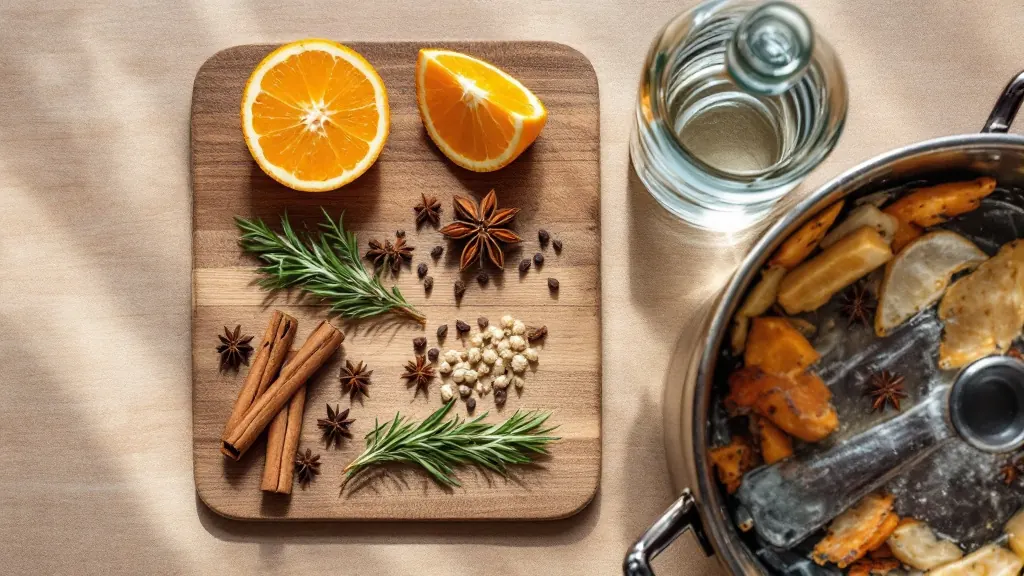
Four groups, one ratio: fruit (one orange or 6–8 dried slices), warm spice (1–2 cinnamon sticks, 6–10 whole cloves), an aromatic herb or resin if you want one (2–3 sprigs), and water (3–4 cups in a two-quart pan). Whole spices only, no sugar, low heat, attended. Everything else is a variation on that.
The four groups every simmer pot needs
A simmer pot works because volatile oils travel with steam. Every ingredient in the pan is either a source of those oils, a carrier that slows their release, or water. That is why the shopping list reproduces across cultures and centuries: fruit for the top note, whole spice for the middle, a resinous herb for depth, and water to move it all into the room.
- Fruit. Citrus is the backbone — orange, lemon, grapefruit, and in autumn apple or cranberry. Peel carries more oil than flesh, so sliced citrus with the peel on does the work.
- Warm whole spice. Cinnamon, clove, star anise, allspice, cardamom, nutmeg pieces. Whole, not ground.
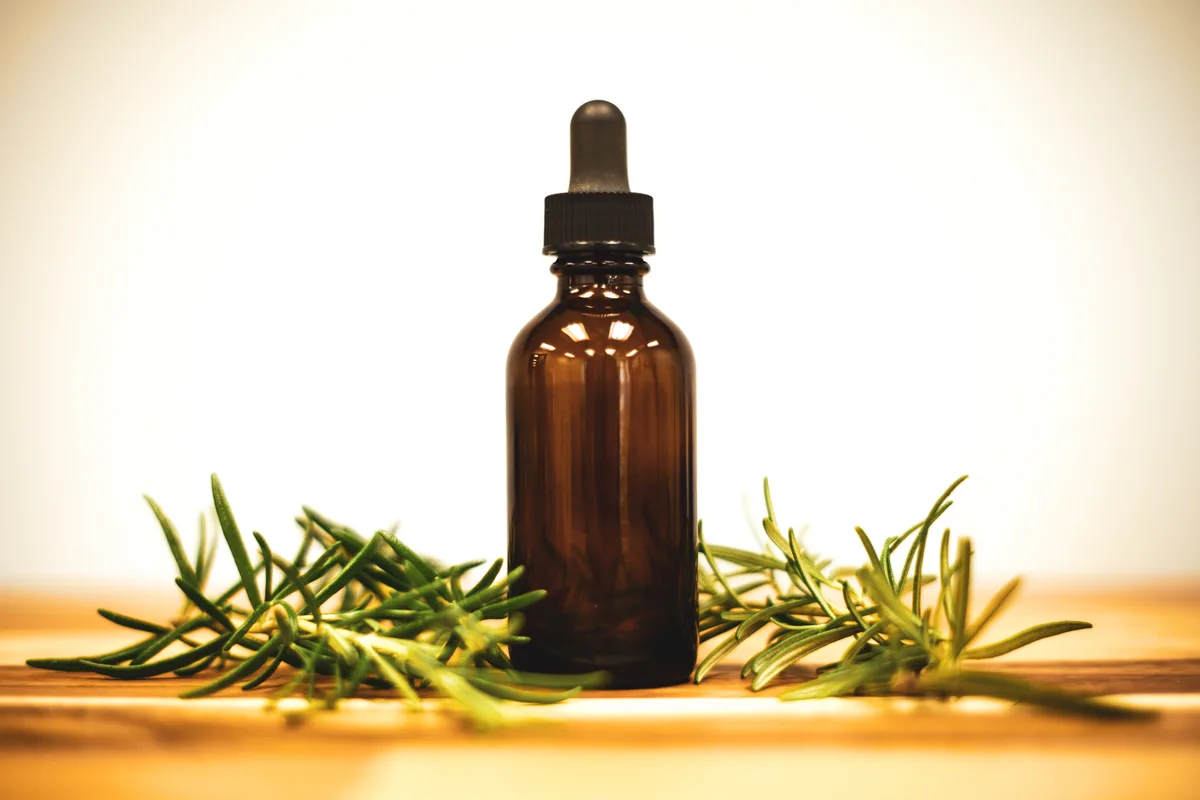
- A green or resinous note. Rosemary, thyme, bay, sage, pine needles, or a drop of vanilla to round it off.
- Water. Three to four cups in a two-quart pan, topped up as it evaporates. Nothing else — no sugar, no oil, no milk.
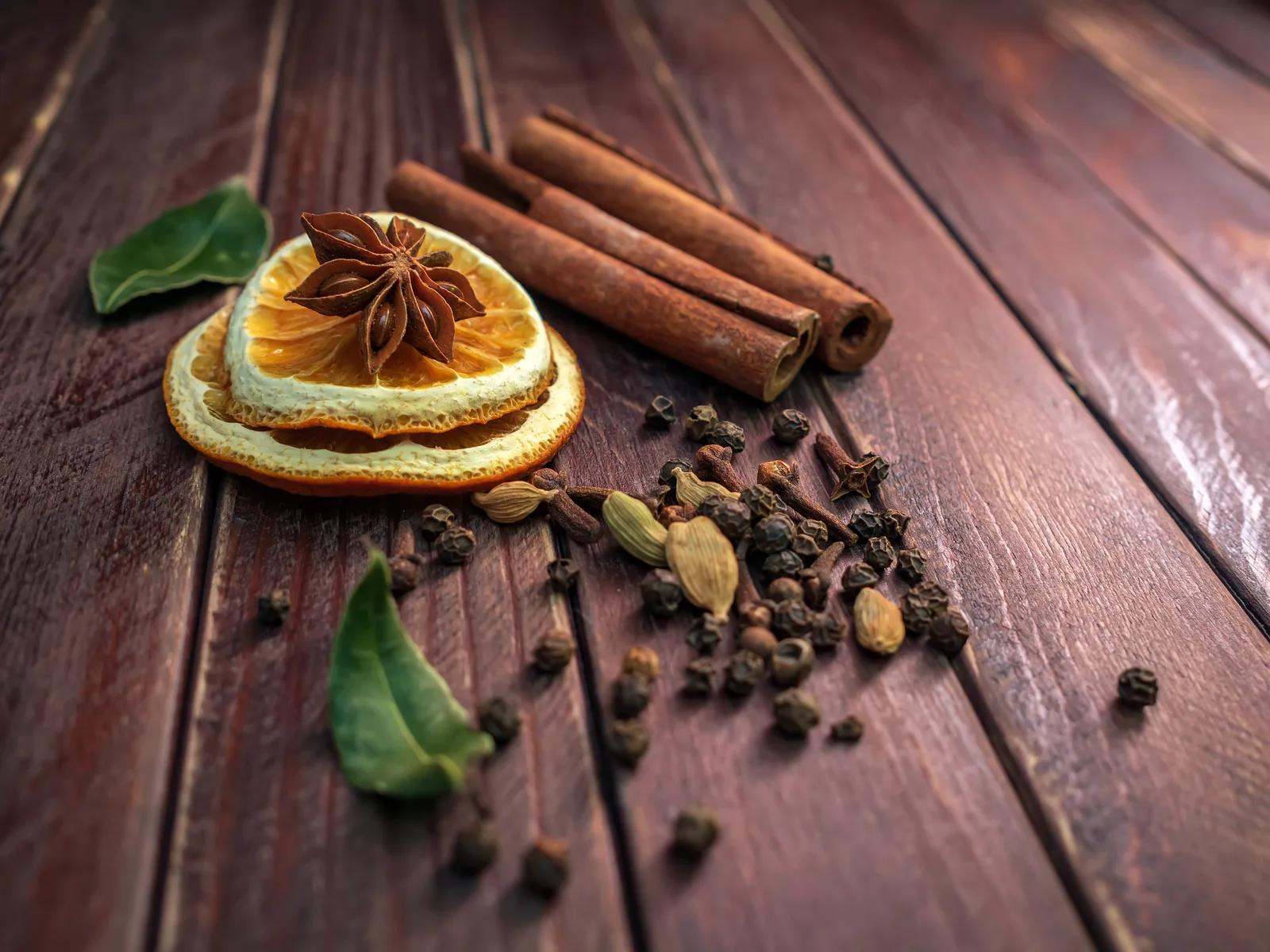
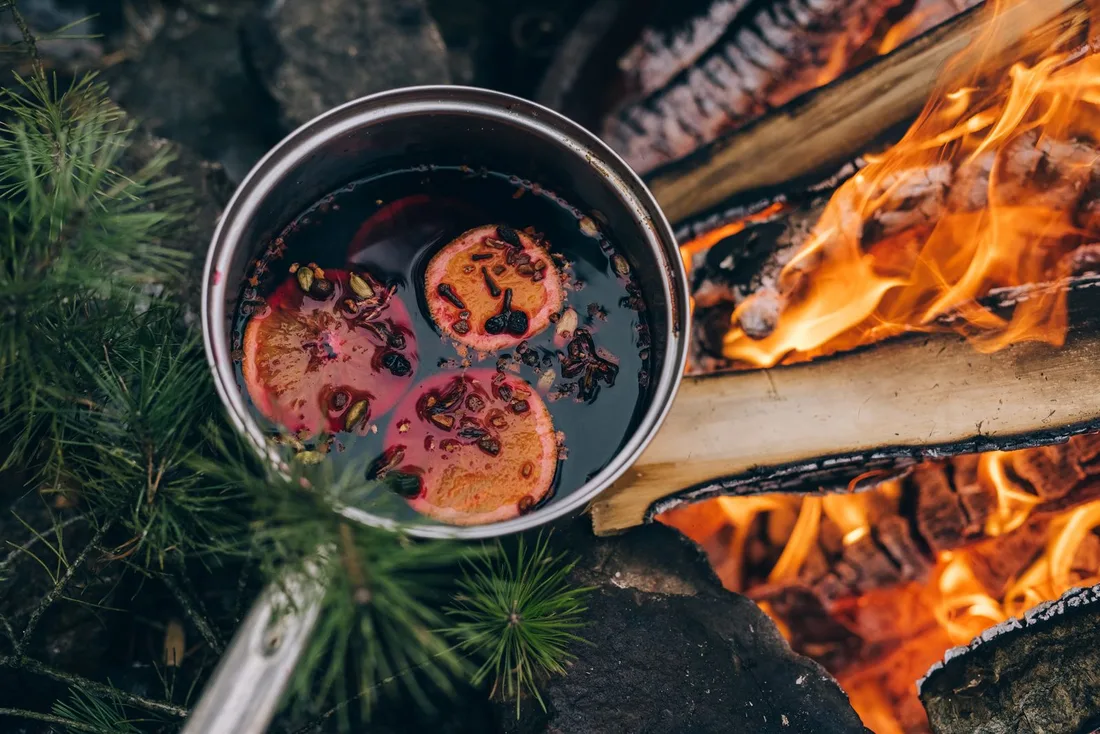
Almost every published stovetop potpourri recipe is this four-part structure with a different accent. Clemson University's HGIC guide to drying oranges for holiday decorations describes the traditional combination as orange slices, cinnamon sticks and whole cloves, which is exactly the fruit-plus-warm-spice pairing above.
How much of each, for a two-quart pan
| Ingredient | Amount for 2 quarts | If you double the pan |
|---|---|---|
| Water | 3–4 cups, 1 inch headroom | Not double — top up as it goes, not at the start |
| Orange | 1 medium, sliced thin | 2 |
| Dried orange slices (in place of fresh) | 6–8 slices | 12–16 |
| Cinnamon sticks | 1–2 | 2–3, not 4 |
| Whole cloves | 6–10 | 10–14 |
| Star anise | 1 pod | 1–2 pods |
| Rosemary, thyme or pine | 2–3 sprigs | 3–4 sprigs |
| Vanilla extract | 1 teaspoon, at the end | 1–2 teaspoons |
Spices do not scale linearly. Doubling the water does not mean doubling the clove, because clove and star anise keep releasing for hours and a doubled quantity ends up harsh by the second hour. Fruit scales cleanly, spice does not. That is the single most common mistake in a homemade pot, and it is why a recipe that smells great in the packet can smell medicinal in the pan.
There is no authority that publishes an official ratio for stovetop potpourri — it is a folk recipe, not a food standard — so the numbers above are the working ranges that published recipes converge on, not a tested formula. Start at the low end, and add a stick or a sprig on the second pot rather than the first. For what happens after the ingredients are in the pan — heat level, topping up, and how long the scent actually lasts — see how to make a simmer pot.
Fresh or dried: swapping one for the other
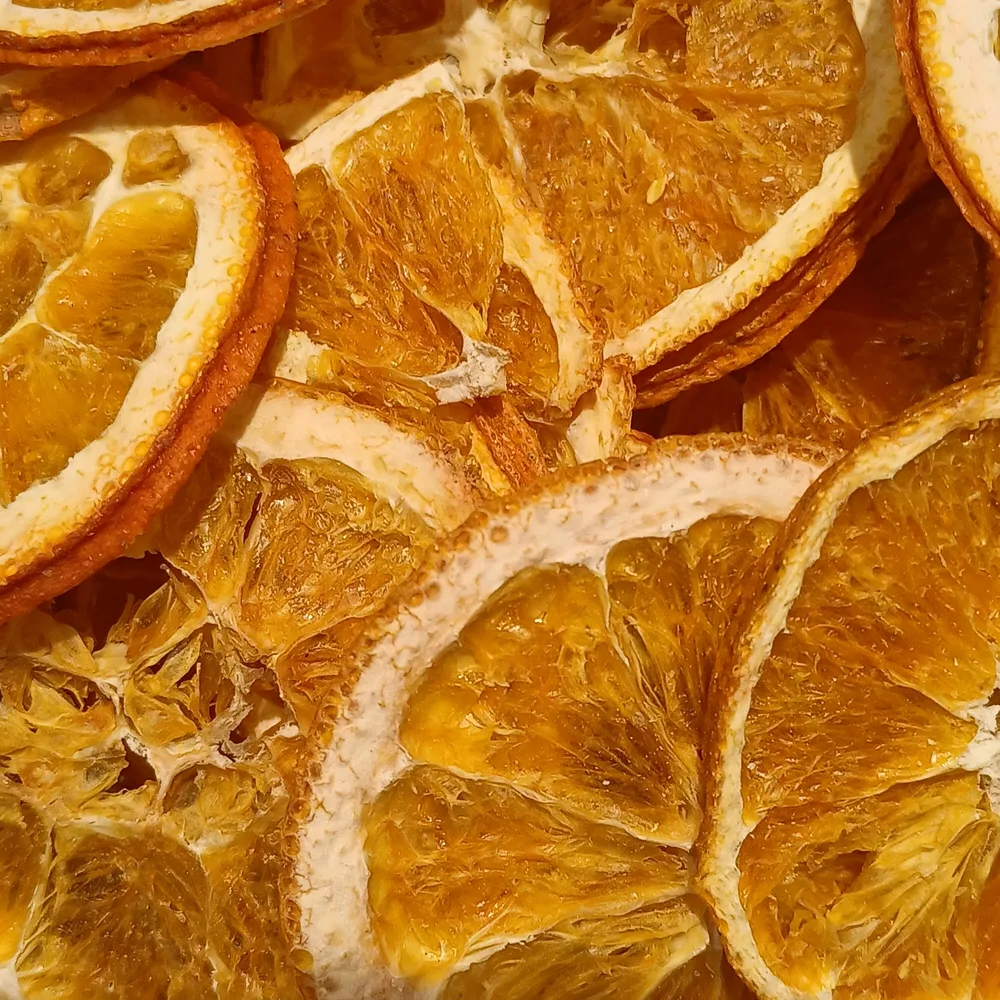
Dried fruit is the same fruit with the water taken out, so the aroma compounds concentrate. As a rough rule, one fresh orange is worth six to eight dried slices — count pieces rather than trying to match weight, because a dried slice is thinner and lighter than a fresh one and weighing tells you less than counting does.
The two behave differently in a pot. Fresh citrus gives a sharper opening note and fades within an hour or two; dried slices open more slowly and keep going. A pot made entirely of dried ingredients is the better choice for a long afternoon; a pot with fresh peel is the better choice for a single evening. Mixing both in one pan is fine and is what most gift blends do.
Dried slices should still be dry, not leathery. If a slice bends rather than snaps, it has enough residual moisture to go soft in a bag — how to dry them is on the dried orange slices page, and storage belongs with the notes on the simmer pot bags page.
Citrus: peel on or off, and which orange
Leave the peel on. The oil glands in citrus peel are where most of the scent lives — that is why a twist of zest is more aromatic than a wedge of flesh. Wash the fruit first if you are using the peel, and if the fruit was sold waxed, scrub it with warm water before slicing.
On variety: navel oranges give the classic note and are easiest to slice; blood oranges give a deeper, almost berry-like tone; grapefruit gives a bitter edge that works in a pot with rosemary but not with cinnamon; lemons are sharp and should be used two or three slices at a time rather than a whole fruit. Clemson HGIC's drying guidance notes that all citrus can be dried, so the choice is about the scent you want rather than about what will work.
Whole spices: cinnamon, clove, star anise, allspice
Four spices cover the winter pots, and they are ranked by how much they dominate a pan:
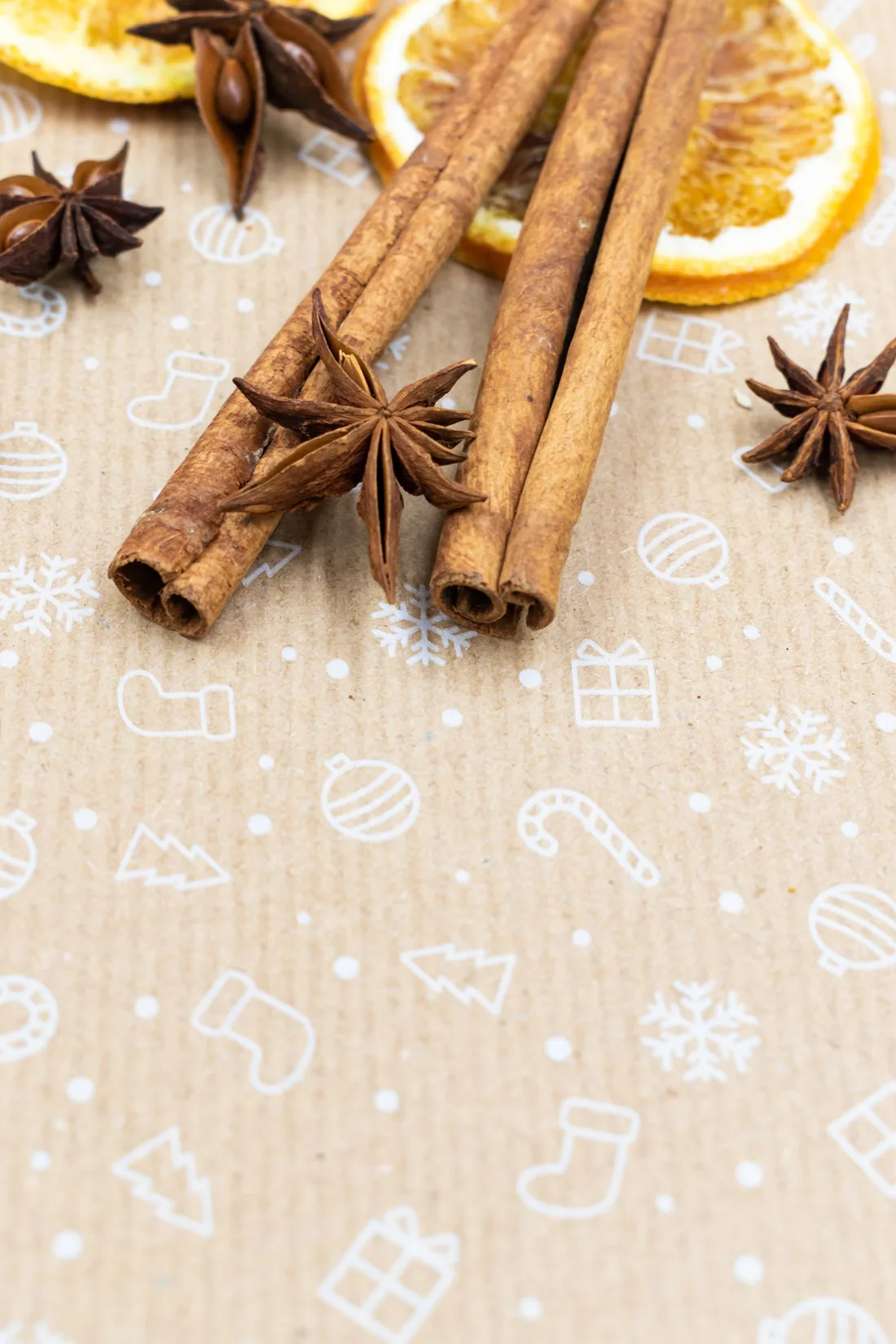
- Cinnamon. The base note. A stick is milder than it smells, so one or two is a floor: cinnamon bark releases slowly and holds a pot together for hours.
- Clove. The loudest. Six to ten whole cloves is plenty for two quarts; push past that and the pot turns medicinal.
- Star anise. One pod, and it reads as liquorice and warmth. It is the note that makes a Christmas blend feel like Christmas rather than like autumn.
- Allspice and cardamom. Both work in small quantities, and both are easy to overdo. Three or four allspice berries, or two cracked cardamom pods, is where most people land.
Snapping a cinnamon stick in half doubles its exposed surface, which is a neat way to get more aroma out of the same stick without adding another. If you cannot smell a spice when you hold it to your nose, it will not do much in a pan — replace the jar.
Herbs, extracts and the vanilla trick
These are the rounding notes. Two or three sprigs of rosemary, thyme or sage; a bay leaf or two; a small handful of pine needles if you have a tree and know it has not been sprayed. Add them last, and add them whole — chopped herbs release faster and turn the water green.
Vanilla is the most useful cheat in the whole list. A teaspoon of extract, added once the water is warm rather than at the start, takes the sharp edge off a citrus pot and makes it read as bakery-sweet without any sugar. Adding it to cold water wastes it: the alcohol flashes off before the aroma can be carried. For the oils question — a drop of essential oil in place of the extract — see the essential oils page, which also covers which ones to keep out of a house with pets.
What not to put in a simmer pot
- Ground spice. It sinks, clouds the water, and scorches on the pan base. Whole only.
- Sugar, honey or syrup. It caramelises onto the pan and does not sweeten the air — nobody is tasting the steam.
- Oils, butter or milk. Fats go rancid in warm water and leave a film that is hard to wash off.
- Decorative potpourri and scented candle wax. Sold for looks, often treated with fragrance oils, and not food-safe ingredients.
- Anything you would not put in your mouth. The steam goes into the room you are breathing in, so the standard is closer to cooking than to cosmetics.
Fire, water and pet questions are separated out deliberately: water level and unattended pans on the simmer pot safety page, and what different ingredients mean for cats and dogs there too rather than here.
A quantity table you can print
For a fridge door, the short version of the table above: one orange (or six to eight dried slices), one or two cinnamon sticks, six to ten cloves, one star anise pod, two or three herb sprigs, three to four cups of water, low heat, attended, topped up. Everything else is optional. Blends that use these in different combinations are on the simmer pot recipes page, and pre-measured versions of the same list are what a simmer pot kit contains.
Our recommended picks
As an Amazon Associate, we earn from qualifying purchases. Links below are affiliate links marked as sponsored — a qualifying purchase may earn us a commission at no extra cost to you.
Whole cloves and star anise
Count them out; clove dominates everything beside it.
Stovetop, water, fire, pet, and child notes are on the simmer pot safety page.
More recipes
Frequently asked questions
How much cinnamon goes into a simmer pot?
One or two sticks for a two-quart pan. Cinnamon is the loudest of the whole spices, and a third stick does not make the pot smell stronger — it makes it smell like a candle shop. If you want more depth, add a bay leaf or a strip of orange peel instead of another stick.
Can I use ground cinnamon instead of sticks?
No. Ground spice does not stay suspended: it sinks, clouds the water and scorches on the base of the pan. Whole spices release their aroma slowly through the steam, which is the whole point, and they are easy to fish out afterwards.
How many cloves is too many?
More than about eight to ten whole cloves in a two-quart pan starts to taste medicinal rather than warm. Clove oil is intense and it dominates everything it sits next to, so count them rather than pouring from the jar.
Fresh or dried orange — does it matter?
It changes the character rather than the strength. Fresh slices give a bright, wet citrus note that fades within a couple of hours; dried slices give a rounder, deeper note that lasts longer and is what most gift bags use. Both work in the same pot, but dried slices should be counted per piece rather than per orange.
What should never go into a simmer pot?
Ground spices, anything with added sugar, oils or butter, and essential oils at full strength. Sugar scorches on the pan base, fats turn rancid in warm water, and concentrated oils are a potency question that belongs with the safety notes rather than the recipe. Scented candles and potpourri sold for decoration are also not ingredients.
Can I put the ingredients in a slow cooker instead?
Yes, and it is the better option for a long session. Use the same proportions in three to four cups of water on low, lid off, and check the water level every couple of hours. A slow cooker holds a low temperature more steadily than a hob, which is why the scent lasts longer without the pan drying out.